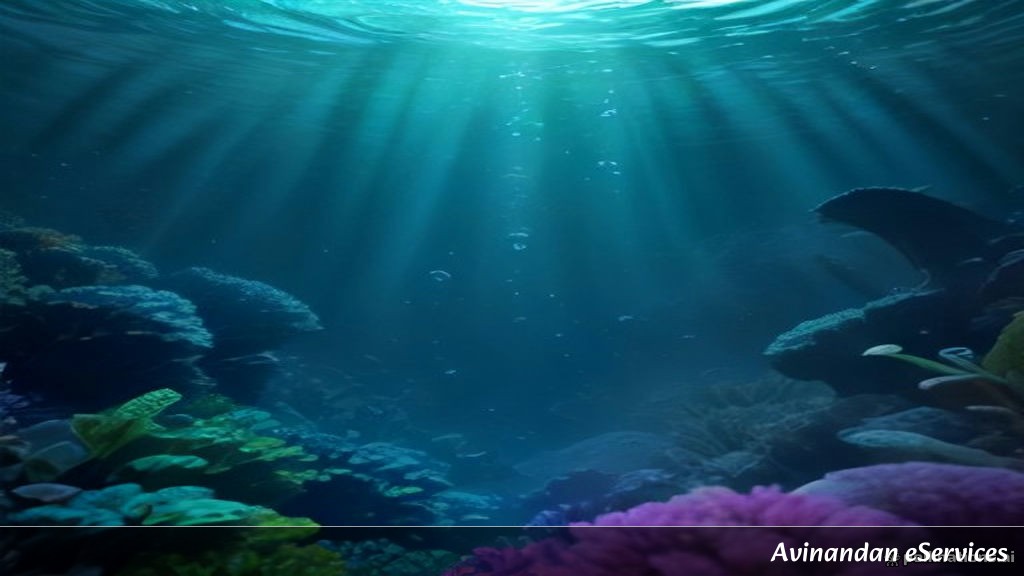
Samir: Saanvi, I was watching some fish swim in the pond near my house, and I noticed that some underwater plants have shiny little silver bubbles stuck all over their leaves! Do they make those bubbles themselves?
Saanvi: You have such a sharp eye, Samir! Yes, those little silver bubbles are actually oxygen gas. The plants make them while doing something called photosynthesis!
Samir: Wait, plants breathe air just like us? But how do they do that when they are completely submerged underwater where there is no open air?
Saanvi: Well, just like land plants, aquatic plants take in sunlight, water, and carbon dioxide to make their own food. During this process, oxygen is produced as a waste product. Since the plant is underwater, the oxygen bubbles cling to its leaves because of water tension!
Samir: Wow, that is so cool! Does that mean the plant is basically wearing a sparkling suit of air armor? Can those bubbles help the plant float up to the surface?
Saanvi: Exactly, Samir! Some floating plants like water lilies use these trapped air pockets as little flotation devices. In physics, we can describe the buoyancy force using the formula $F_b = \rho \cdot g \cdot V$, where the volume of trapped air $V$ helps increase the upward force!
Samir: Physics equations make it sound even more awesome! So these plants are like tiny underwater scuba divers making their own oxygen supply right on their leaves.
Saanvi: They really are! And scientists study these clever plant adaptations to understand how life thrives in different aquatic ecosystems all over the world.
So, What Did We Learn Today?
- Aquatic plants produce oxygen bubbles underwater through the process of photosynthesis.
- Tiny oxygen bubbles stick to plant leaves due to water tension and help some species float.
- Physics principles like buoyancy help explain how trapped air keeps plants near the water surface.
Samir: I am definitely going to look closer at pond plants the next time I go outside to see if I can spot those science scuba bubbles!