Introduction: What is the MSP for Kharif Crops 2024-25?
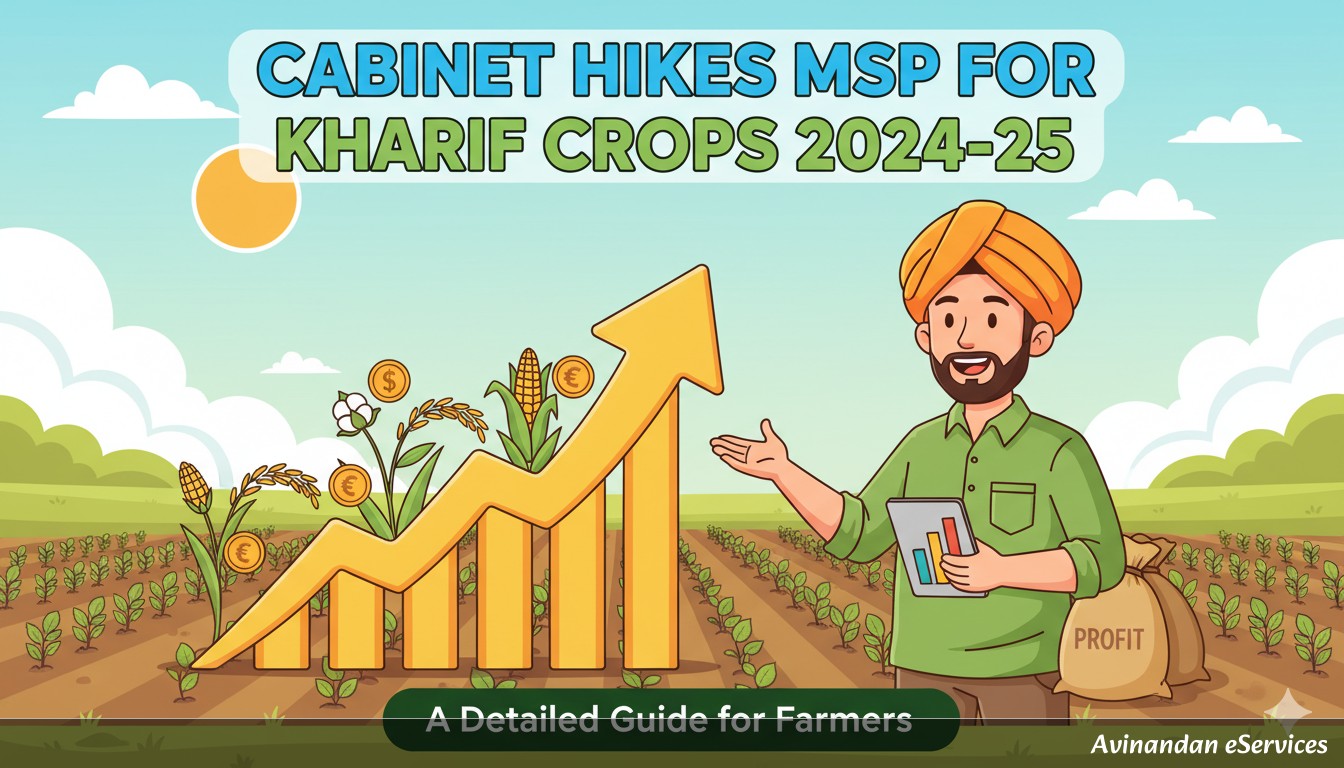
In a major decision aimed at boosting farmer income, the Union Cabinet, chaired by Prime Minister Shri Narendra Modi, has approved a significant increase in the Minimum Support Prices (MSP) for all 14 mandated Kharif crops for the marketing season of 2024-25. This timely announcement, made before the sowing season, provides farmers with a guaranteed price for their produce, ensuring they receive remunerative returns and are protected from sharp falls in market prices.
MSP is a form of market intervention by the Government of India. It acts as a safety net or a floor price for farmers. If the market price for a crop falls below the announced MSP due to a bumper harvest or other factors, government agencies will step in and purchase the entire quantity offered by the farmers at the guaranteed MSP. This policy is designed to support farmers, encourage crop production, and ensure food security for the nation.
The latest hike continues the government's policy, established in the Union Budget of 2018-19, of fixing the MSP at a level that is at least 1.5 times the All-India weighted average cost of production. This ensures a minimum 50% margin for the farmers on their investment.
Key Features and Objectives of the MSP Hike
The primary objective of increasing the MSP is to ensure remunerative prices for growers and to encourage crop diversification towards oilseeds, pulses, and nutri-cereals (Shree Anna). This strategy aims to make farming more profitable, sustainable, and less reliant on water-guzzling crops like paddy.
Key Highlights of the MSP for Kharif Marketing Season 2024-25:
- Significant Increase for Oilseeds and Pulses: The highest absolute increase in MSP over the previous year has been approved for oilseeds and pulses. Nigerseed saw the largest hike of Rs. 983 per quintal, followed by sesamum at Rs. 632 per quintal, and Tur/Arhar at Rs. 550 per quintal. This is a deliberate move to encourage farmers to cultivate these crops and help reduce India's import dependency.
- Assured Profit Margins: The expected profit margin for farmers over their cost of production is estimated to be the highest for Bajra (77%), followed by Tur (59%), Maize (54%), and Urad (52%). For all other crops, the margin is projected to be at least 50%.
- Paddy MSP Increased: The MSP for the most common Kharif crop, Paddy (Common variety), has been increased by Rs. 117 to Rs. 2,300 per quintal from Rs. 2,183 in the previous year.
- Focus on Nutri-Cereals: In line with promoting nutritious and climate-resilient crops, the MSP for Ragi has been substantially increased by Rs. 444 to Rs. 4,290 per quintal.
MSP for Mandated Kharif Crops (Marketing Season 2024-25):
Here is the detailed list of the newly approved MSPs compared to the previous year:
| Crop | MSP 2023-24 (Rs/quintal) | MSP 2024-25 (Rs/quintal) | Absolute Increase (Rs/quintal) |
|---|---|---|---|
| Paddy (Common) | 2183 | 2300 | 117 |
| Paddy (Grade A) | 2203 | 2320 | 117 |
| Jowar (Hybrid) | 3180 | 3371 | 191 |
| Bajra | 2500 | 2625 | 125 |
| Ragi | 3846 | 4290 | 444 |
| Maize | 2090 | 2225 | 135 |
| Tur (Arhar) | 7000 | 7550 | 550 |
| Moong | 8558 | 8682 | 124 |
| Urad | 6950 | 7400 | 450 |
| Groundnut | 6377 | 6783 | 406 |
| Sunflower Seed | 6760 | 7280 | 520 |
| Soybean (Yellow) | 4600 | 4892 | 292 |
| Sesamum | 8635 | 9267 | 632 |
| Nigerseed | 7734 | 8717 | 983 |
| Cotton (Medium Staple) | 6620 | 7121 | 501 |
| Cotton (Long Staple) | 7020 | 7521 | 501 |
Who is Eligible? (Eligibility Criteria)
The Minimum Support Price policy is applicable to all farmers across India who cultivate the 14 mandated Kharif crops. There are no specific landholding size or income criteria to be eligible for the MSP benefit. The core eligibility is simply being a farmer who has grown one of the specified crops and wishes to sell it.
It is important to note that while all farmers are eligible, they are not obligated to sell their produce at MSP. If a farmer receives a better price from private traders or in the open market, they are completely free to sell to them. The MSP acts as a safety net, providing a guaranteed alternative in case market prices are unfavorable.
How to Apply / Avail the Benefits
Farmers do not need to fill out a separate application form to 'avail' the MSP. The benefit is realized through the process of procurement, where farmers sell their crops at designated procurement centers.
The Procurement Process:
- Locate Procurement Centers: The government, through its agencies like the Food Corporation of India (FCI) and other state-designated agencies, sets up procurement centers. These are usually located in local APMC (Agricultural Produce Market Committee) mandis or other designated spots. Farmers need to identify the nearest authorized center for their crop.
- Registration: In many states, farmers are required to pre-register on a state-specific procurement portal. This often involves providing details of their land records, Aadhaar card, bank account information, and the estimated quantity of the crop they intend to sell. This helps in streamlining the procurement process.
- Quality Norms: The produce brought by the farmer must meet the Fair Average Quality (FAQ) norms specified by the government. These norms relate to moisture content, foreign matter, and damaged grains to ensure the quality of the procured stock.
- Sale and Payment: Once the quality is verified, the produce is weighed, and the sale is executed at the announced MSP. The payment is typically transferred directly to the farmer's bank account (Direct Benefit Transfer - DBT) within a stipulated timeframe, ensuring transparency and reducing delays.
Key Agencies Involved:
- Food Corporation of India (FCI): The primary central agency responsible for the procurement of wheat and paddy.
- State Government Agencies: State-level agencies work in coordination with the FCI to carry out procurement operations.
- NAFED & NCCF: For pulses and oilseeds, procurement is often handled by the National Agricultural Cooperative Marketing Federation of India Ltd (NAFED) and the National Co-operative Consumers' Federation of India Ltd. (NCCF) under the Price Support Scheme (PSS).
- Cotton Corporation of India (CCI) & Jute Corporation of India (JCI): These specialized bodies handle the procurement of cotton and jute, respectively.
By providing a guaranteed price and an assured market, the MSP policy plays a crucial role in shaping farmers' sowing decisions, stabilizing their income, and ensuring the country's food security.
Official Sources
Press Information Bureau (PIB) Press Release: https://pib.gov.in/PressReleasePage.aspx?PRID=2026573
Press Information Bureau (PIB) Feature: https://pib.gov.in/PressReleasePage.aspx?PRID=2027204