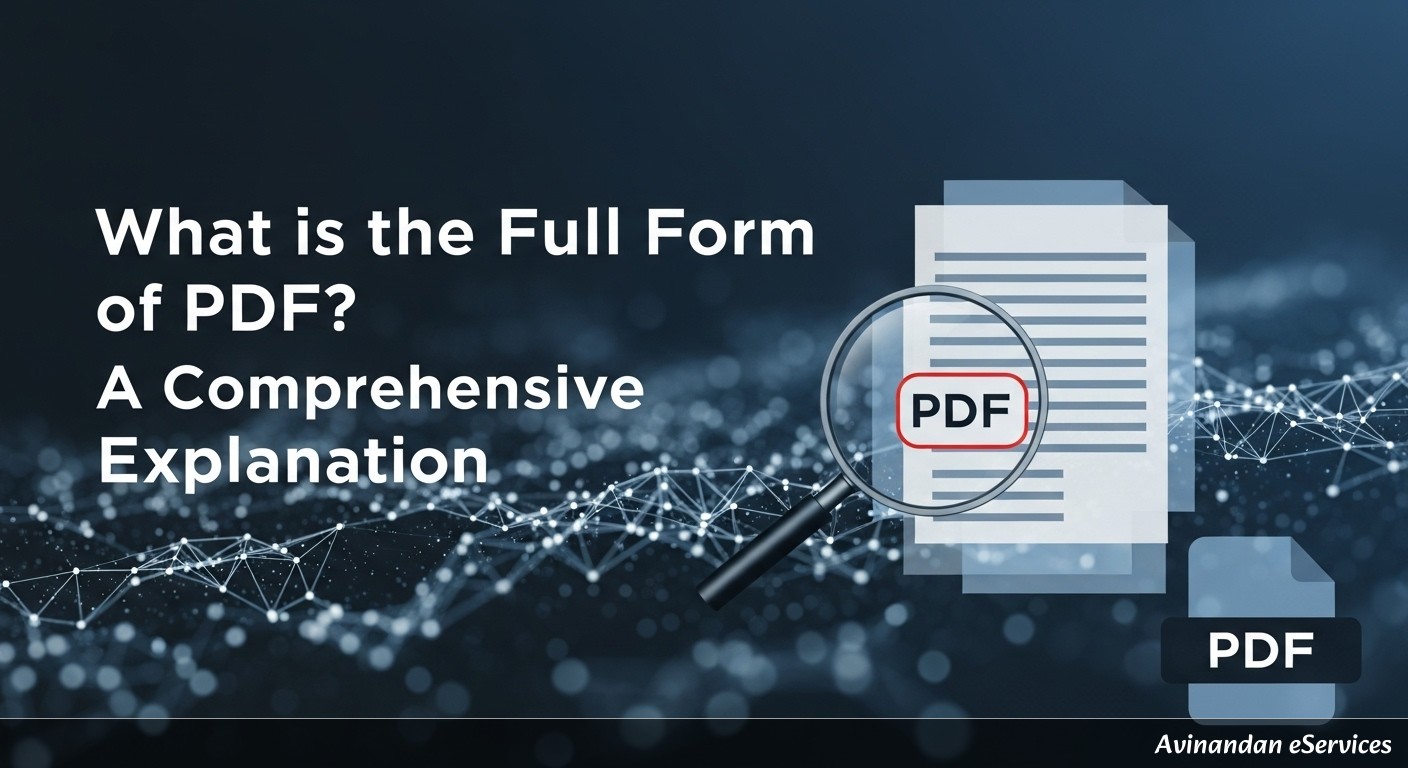
Introduction: What is the Full Form of PDF?
The full form of PDF is Portable Document Format. It is a widely used file format developed by Adobe that allows for the reliable presentation and exchange of documents, regardless of the software, hardware, or operating systems used. PDFs are designed to maintain the original formatting, layout, fonts, and graphics of a document, ensuring it looks the same for everyone who views it.
Detailed Breakdown of the Acronym
Let's break down each part of the acronym:
- Portable: This signifies that the document can be easily moved and opened across different devices, platforms, and operating systems without losing its original formatting or appearance.
- Document: This refers to the nature of the file, which is intended to present information in a structured and readable format, similar to a printed document.
- Format: This indicates that it is a standardized way of organizing and storing data within a file, ensuring consistency and compatibility.
History and Purpose
The development of PDF began in 1991 with Adobe co-founder John Warnock's vision for a universal document format that could preserve visual integrity across various platforms [3, 12]. The goal was to create a file format that allowed documents to be viewed, printed, and shared while maintaining their original design, irrespective of the software or hardware used [9, 16]. Adobe introduced the first version of Adobe Acrobat, enabling the creation and viewing of PDF files, in 1993 [11]. Initially, PDF was a proprietary format controlled by Adobe. However, in 2008, Adobe released PDF as an open standard, transferring its control to the International Organization for Standardization (ISO) [3, 11]. This transition made the specifications universally accessible, promoting broader compatibility and adoption. The primary purpose of PDF was to solve the problem of inconsistent document presentation across different systems, a common issue before its creation [16, 12].
Importance and Usage
PDFs have become indispensable in both personal and professional contexts due to their consistent appearance, security features, and versatility [15, 7]. They are crucial for:
- Universal Compatibility: PDFs ensure that documents look identical on any device, operating system, or software, making them ideal for official forms, certificates, study materials, and presentations [2, 7].
- Document Exchange and Archiving: They provide a reliable way to share and store documents, whether for legal contracts, academic papers, eBooks, or invoices [16, 7]. The PDF/A standard is specifically designed for long-term archiving [5, 7].
- Security: PDF files can be encrypted with password protection, making them suitable for sensitive information [15]. They also support digital signatures, enhancing document authenticity and security [4, 16].
- Rich Content: PDFs can incorporate text, images, vector graphics, hyperlinks, form fields, audio, and video, making them highly versatile [1, 4, 16].
- Space Efficiency: PDFs often use compression techniques to reduce file size without sacrificing quality, making them easier to share and store [15, 14].
- Reduced Printing: The format supports features like forms and digital signatures, contributing to a paperless office environment and reducing printing costs [14].
Many applications, including Microsoft Word, Excel, and PowerPoint, allow users to easily save documents in PDF format, further cementing its widespread use [6].
Frequently Asked Questions (FAQs) about PDF
- What does 'Portable' mean in Portable Document Format? It means that the document can be easily transferred and viewed across different devices, operating systems, and software without changing its appearance.
- Is PDF a free format? While initially a proprietary format, PDF is now an open standard maintained by ISO, and there are many free tools available to create, view, and edit PDFs.
- Can PDF files be edited? By default, PDFs are designed for viewing and are difficult to edit. However, with specialized software or online tools, minor edits to text, as well as more complex manipulations like adding pages or combining documents, can be performed.
- Why are PDFs important for official documents? Their ability to maintain formatting precisely, support for digital signatures, and security features make them ideal for contracts, legal documents, and government forms, ensuring authenticity and consistency.